Showing posts with label formative assessment. Show all posts

Tuesday, April 7, 2020

Lesson Planning in Distance Learning

Distance Learning Begins

On Sunday, March 15, Minnesota governor Tim Walz, closed public schools so that educators could plan for long-term plans for the continuity of education. We had approximately two weeks to completely revolutionize the way we teach and the way students learn.

Collaborative Backwards Planning As Usual

Although the way we "do school" certainly looks different, the philosophies at the core of our teaching and learning remain the same.

One of these approaches to teaching that hasn't changed is the way in which we collaboratively plan for instruction with the end in mind; first starting with the essential learning then planning for how students show successful mastery and then giving feedback framed in terms of those criteria.

Research for Better Teaching, Inc. published the graphic below that does a nice job of visually representing this chain.

Questions To Consider When Collaboratively Planning

1. Communicate Objectives

  • What do we want students to understand (concepts), know (knowledge) or be able to do (skills)?
    • These essential learnings can come from central ideas, lines of inquiry and state standards.
    • These essential learnings can be communicated in many ways (not just as "I Can" statements). In a programme that values inquiry, questions can be an effective way to spark curiosity while communicating to students the learning target.

2. Select Performance or Product

  • How will students demonstrate they understand, know or are able to do what we have identified as essential?
  • How can we set up loose enough parameters that students' can still exercise their creativity and voice in how they choose to demonstrate proficiency?

3. Develop Criteria

  • What does success look like?
  • Our team should decide on loose enough criteria so that student responses can be varied, create and unique, yet specific enough to help us frame the feedback we give students.

4. Give Feedback

  • Using the previously developed success criteria, communicate to students how they hit the mark or help them to understand what they're missing and how they can improve.

What does this look like in practice?

1. Communicate Objectives

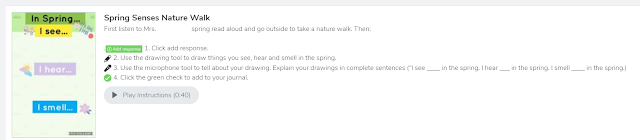
  • Conceptual understanding: Based on the current unit of inquiry's central idea, teachers want the students to understand that senses are used for exploring and staying safe.

2. Select Performance or Product

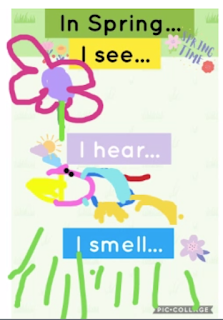
  • Performance Assessment: Students will use their senses to explore during a spring nature walk and identify what they see, hear and smell.

3. Develop Criteria

  • Does the student's response make sense for what you'd see, hear, and smell outside in Minnesota in springtime?
  • Does the student include ideas similar to the ones in the read-aloud that was a part of this learning experience?

4. Give Feedback

  • If a particular student's responses do not make sense or are not similar to the ones in the read-aloud, how can we provide corrective feedback that helps students to get closer to a more successful response?


Distance Learning's Unintended Positive Consequences

Although distance learning has some limitations, the format promises to enhance collaboration, personalization and the quality and the specificity of feedback we give to students.

Wednesday, October 15, 2014

Making Visualizations Visible

The ultimate goal of literacy instruction is to arm students with the literacy processes, strategies, and skills that they will be able to intuitively and independently use to extract meaning from text. "Text" can include the written word, videos, interviews, speakers, field trips, conversations, discussions, and more.

The teaching and learning of these literacy strategies is best done in authentic contexts. On page 70 of Making the PYP Happen, the authors state that "it is the school's responsibility to provide authentic context for language teaching and learning in all areas of the curriculum," [emphasis added].

In a Primary Years Program (PYP), the program of inquiry provides the authentic, engaging, challenging, and significant context for learners to develop and use language. In other words, teachers should situate literacy instruction right inside the units of inquiry. However, it should be clarified that although comprehension and metacognitive strategies are to be taught within the unit of inquiry, it cannot be assumed that learners will implicitly pick up on these strategies while studying content concepts. PYP teachers still must provide specific time and opportunities for their learners to explore, discover, practice, and construct understanding of these literacy strategies. When we teach literacy in this way, students are learning literacy processes and content concepts simultaneously.

Recently, I took the opportunity to teach a first grade reading lesson from our school's literacy curriculum. The objectives of the lesson were that students would retell story events and visualize & analyze characters during reading. Rather than use the text provided by the series, which would not have been authentic, challenging, or significant for the first graders, I choose a text that would help the learners understand their current Unit of Inquiry's Central Idea: Responsible choices promote balanced living.


A List from Frog and Toad Together by Arnold Lobel.

In the story A List, Toad creates a list of all the things he'll do during the day. I selected this story because the list he makes contains many responsible choices that would represent a balanced lifestyle. (SPOILER ALERT: Toad never completes all the items on the list because it blows away in the wind and he subsequently goes melodramatically ballistic, which should not come as a shock for those of you who know Toad well.)

Before reading the story, I discussed with the students the importance of being able to really understand a story while we read. "After all," I said, "that's the point of reading! To understand what you read." In their book Strategies that Work, Harvey and Goudvis say that "different readers rely on different strategies to help them gain better understanding." One such strategy is visualizing. "Visualizing strengthens our inferential thinking. When we visualize, we are in fact inferring but with mental images rather than words and thoughts." The authors continue, "When we visualize, we create pictures in our minds that belong to us and no one else," (p. 130-2).

However, if we let students keep their visualizations locked up in their minds, students may become mentally overwhelmed. Rather, my goal of the lesson was to get students to make their visualizations visible so that they could more fully engage in thinking. "...it is difficult [for students] to do their best thinking because of cognitive overload, that is, because the thinking demands exceed their capacity. When our thinking is distributed, when we do not have to rely solely on our internal mental resources, we free ourselves up to engage in more challenging thinking," Ron Ritchhart in Intellectual Character: What It Is, Why It Matters, and How to Get It, p. 100-1).

I prompted students to visualize what was going on in the story as I read, but then to draw those pictures from their mind on a blank sheet of paper. After reading, we talked about what their pictures should include, if they really, truly understood the story. Together, we decided that students would need to have the characters of the story, the setting (time and place), and what went on in the story (the events).

To show students how to self-assess their understanding of the text, one student showed his visualization to the group while I modeled the kinds of questions the students should ask themselves.


Did I understand the story?
Did I include the characters?
Did I include the setting?
Did I include the important events of the story?
By reviewing all the students' visible visualizations (I included other examples below), the classroom teacher and I could clearly and quickly see who was able to adequately extract meaning from the text and who was not. Using this powerful information, the classroom teacher could form guided reading groups to support students' unique and specific literacy needs.


After reading about making students' thinking and understanding visible by having them draw out their mental visualizations, how could you make your students' visualizations visible with the "texts" they read, listen to, and view?

Monday, September 22, 2014

Creating rubrics with students

In 2012, representatives from the International Baccalaureate evaluated our Primary Years Program. Among the 52 recommendations that came from that report was the following:

"The school provides further opportunities for students to participate in the assessment of their work, help develop assessment tools, and reflect on the assessment of their work. The school continues to support students in documenting peer/self-assessment activities to enable them to reflect on these over a period of time."

When our school’s staff had a chance to reflect on the recommendations contained in the report, one staff member commented: “I know we can create a rubric with the students, but I struggle with the ‘how’.”

Assessment in the classroom will include, among other things, developing clear rubrics, (Making the PYP Happen, p. 45). In that document, a rubric is defined as, "an established set of criteria for rating students in all areas. The descriptors tell the assessor what characteristics or signs to look for in students' work and then how to rate that work on a predetermined scale. Rubrics can be developed by students as well as by teachers," (p. 49). 

Developing a rubric with students is important because they deserve to know the criteria on which their behavior, creations, performance, and thinking will be judged. When students have a hand in creating rubrics together with their teacher, they have a better understanding of what is expected of them and they also feel included.

One third grade teacher recently created a rubric with her students, outlining the expectations that they have for each other during "work time".

To begin, the teacher asked students to give her examples of "work time" that they had already experienced in third grade. Responses given included:
  • Morning work
  • Personal histories (unit of inquiry)
  • Grit reading (independent work time)
  • Portfolios
Next, the teacher set the purpose and explained what a rubric was with the following slides: 


To help guide their rubric creation, the teacher gave the students the criteria (focus & commitment, independent work/reading, small/guided reading group) and the predetermined scale (zones 1, 3, & 5). 


To create the descriptors for each zone, the teacher first asked students to identify exemplar behaviors for each category (Zone 5). Students were instructed to turn and talk with a neighbor to discuss ideas before sharing with the whole class.

Once students had collectively identified the behaviors that were favorable, students worked together to fill in descriptors for Zone 1, the behaviors to avoid. Again, students were invited to talk with a neighbor before a whole-class discussion ensued.

Finally students collaboratively thought about the kinds of behavior that one would exhibit to be in Zone 3.


Next, the teacher showed pictures of the students that she had previously taken during work time and asked the kids to place the students in the pictures in a particular zone, according to the criteria that they had just discussed. This practice allowed the teacher to formatively assess the students' understanding of the descriptors they had just created and would eventually be judged against.


Rubrics are important assessment tools and involving students in the creation of rubrics helps them better understand what is expected of them. After reading about how one third grade teacher created a rubric with her students, how could you or have you created a rubric with your students in your classroom?