Showing posts with label assessment. Show all posts

Tuesday, April 7, 2020

Lesson Planning in Distance Learning

Distance Learning Begins

On Sunday, March 15, Minnesota governor Tim Walz, closed public schools so that educators could plan for long-term plans for the continuity of education. We had approximately two weeks to completely revolutionize the way we teach and the way students learn.

Collaborative Backwards Planning As Usual

Although the way we "do school" certainly looks different, the philosophies at the core of our teaching and learning remain the same.

One of these approaches to teaching that hasn't changed is the way in which we collaboratively plan for instruction with the end in mind; first starting with the essential learning then planning for how students show successful mastery and then giving feedback framed in terms of those criteria.

Research for Better Teaching, Inc. published the graphic below that does a nice job of visually representing this chain.

Questions To Consider When Collaboratively Planning

1. Communicate Objectives

  • What do we want students to understand (concepts), know (knowledge) or be able to do (skills)?
    • These essential learnings can come from central ideas, lines of inquiry and state standards.
    • These essential learnings can be communicated in many ways (not just as "I Can" statements). In a programme that values inquiry, questions can be an effective way to spark curiosity while communicating to students the learning target.

2. Select Performance or Product

  • How will students demonstrate they understand, know or are able to do what we have identified as essential?
  • How can we set up loose enough parameters that students' can still exercise their creativity and voice in how they choose to demonstrate proficiency?

3. Develop Criteria

  • What does success look like?
  • Our team should decide on loose enough criteria so that student responses can be varied, create and unique, yet specific enough to help us frame the feedback we give students.

4. Give Feedback

  • Using the previously developed success criteria, communicate to students how they hit the mark or help them to understand what they're missing and how they can improve.

What does this look like in practice?

1. Communicate Objectives

  • Conceptual understanding: Based on the current unit of inquiry's central idea, teachers want the students to understand that senses are used for exploring and staying safe.

2. Select Performance or Product

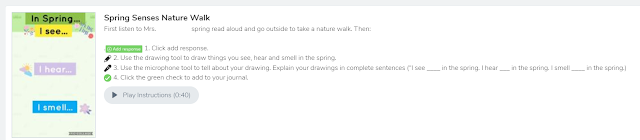
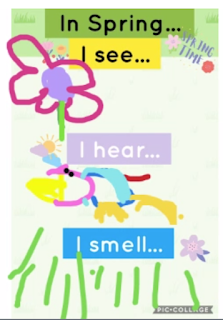
  • Performance Assessment: Students will use their senses to explore during a spring nature walk and identify what they see, hear and smell.

3. Develop Criteria

  • Does the student's response make sense for what you'd see, hear, and smell outside in Minnesota in springtime?
  • Does the student include ideas similar to the ones in the read-aloud that was a part of this learning experience?

4. Give Feedback

  • If a particular student's responses do not make sense or are not similar to the ones in the read-aloud, how can we provide corrective feedback that helps students to get closer to a more successful response?


Distance Learning's Unintended Positive Consequences

Although distance learning has some limitations, the format promises to enhance collaboration, personalization and the quality and the specificity of feedback we give to students.

Thursday, July 14, 2016

Assessment-Capable Learners: Understanding one of Hattie's most powerful influences on student achievement

John Hattie published Visible Learning (2009) to synthesize evidence-based research in order to tell a specific and compelling story: 
  • Almost nothing we do harms kids
  • Most of what we do leads kids to learning
  • Therefore, instead of talking about "what works", we should be focused on "what works best"
Doug Fisher says that Hattie's work tells us what works, how it works and when it works. Deb Masters suggests the Mindframes for Teachers and Leaders represent a succinct story of the Visible Learning Research. 

My sketchnotes from Masters' session on the 10 Mindframes for Teachers & Leaders.
To clearly show what works best (has greater probability of having a high impact on student learning), Hattie used the research to calculate the effect size for each influence studied. He found that an effect size of d = 0.15 to d = 0.40 represented what teachers can accomplish in a typical year of schooling. He argued therefore, we must focus on those strategies that have an effect size of d = 0.40 and higher; those influences that work best.
http://www.education.vic.gov.au/Documents/about/research/ravisiblelearning.pdf
When Visible Learning Trainer Dave Nagel came to our district in February 2016, he mentioned an influence I hadn't heard of before in Hattie's research: Assessment-Capable Learners. Assessment-Capable Learners, Nagel explained, had an effect size of d =1.44, well above the majority of the other influences listed in Hattie's research. This influence is one of the most important things we can do to raise student achievement.

Although Nagel showed the following slide during his keynote, I was still left confused; what the heck was an Assessment-Capable Learner? How do we develop these types of students?


A slide explaining the attributes of an Assessment-Capable Learner from Dave Nagel, February 2016
As with many of the influences on Hattie's list, there is great danger at taking misguided action based on a superficial understanding of what an Assessment-Capable Learner is. On the surface, one might think that Hattie is suggesting that we develop learners who are capable of successfully taking assessments, particularly those high stakes tests which are pervasive in schools throughout the world; learners who have practiced and are skilled at various test-taking strategies: closely-reading the questions, eliminating answers obviously wrong, going back and checking work, etc. However there is evidence that teaching learners these test-taking strategies actually does not have a high impact on student learning (teaching test-taking: d = 0.27).

Those that have an initial misunderstanding of an Assessment-Capable Learner aren't alone. When asked, "Why are we striving for an 'assessment-capable learner' and not a 'self-regulated learner?'" Hattie admitted that he struggles with a lot of "those words". Rather, he suggests that we think about Assessment Capable Learners in this way: "When students see themselves as their own teachers."

Each keynote and breakout session at the Annual Visible Learning Conference in Washington, D.C. allowed me to further construct my own understanding of Assessment-Capable Learners. Below, I share a synthesis of my thinking:


Assessment-Capable Learners:
  • can answer the following three questions, as long as teachers have clearly communicated learning intentions and success criteria (teacher clarity: d = 0.75)
    1. What am I learning?
    2. Why am I learning it?
    3. How will I know when I've had success & have learned it?

  • know where they are, where they're going (based on clear learning intentions & success criteria) and their next steps to move forward.
  • know the language of learning (VOICE) and make decisions about their learning (CHOICE)
  • are open to and expect feedback.
  • give feedback to others, because they recognize the powerful impact they can have on their peers' learning.
  • set challenging, yet realistic learning goals AND put forth the effort to reach them.
  • are active, involved and engaged in their own learning.
  • are radical change agents
  • see errors as opportunities for learning
  • exhibit the eight Mindframes for Learners:
    1. I want to know what success looks like.
    2. I like challenging goals.
    3. I want to master and have deep learning.
    4. I am confident I can learn.
    5. I want to become my own teacher.
    6. I engage in dialogue, not monologue, about my learning.
    7. I like to plan to implement my learning goals.
    8. I want to learn to be strategic in my learning goals.

As I continue to construct my own understanding of an Assessment-Capable Learner, I begin to ask: what do we teachers need to do to develop these dispositions and encourage these actions in the learners with whom we work?

THANK YOU to all the presenters at the conference. My thinking above represents a synthesis of keynotes and breakout sessions led by those directly quoted above and: Paul Bloomberg, Barb Pitchford, Peter DeWitt, Michael Fullan, Jen Mall, Michael McDowell.

Thursday, October 29, 2015

LET 'EM CHOOSE! Using Academic Choice Literacy Stations in the Elementary Classroom

We want our students to acquire the skills necessary to make good choices in their future. In order to develop those skills, a trusted colleague told me that we must create safe places where students can make mistakes.

Ruth Sidney Charney, in her book Teaching Children to Care, echoes this sentiment when she writes, "Children are growing up in a world with frightful persuasions and terrifying problems. Rather than providing prescriptions for them, we need to give them choices. Decision making must be part of the expected curriculum. There are many kinds of purposeful choices students may make in a regular school day." (p. 374)

One authentic way students can develop these decision-making skills is by giving them the power to choose how they'd like to spend their independent literacy learning time while the teacher is meeting with a guided reading group.

But when planning out the choices we'll give children to independently complete, what exactly can be classified as an Academic Choice Literacy Stations? Conversely, what isn't an appropriate option during this time of the school day? 

To answer these questions, I turned to the teachers with whom I work. Their responses are below:

Academic Choice Literacy Stations are:

  • permanent, but not always.
  • set aside for specific learning purposes.
  • physical spaces, but not always.
  • task-oriented with clear expectations.
  • more task oriented/hands on for younger students, older students need less task-oriented/hands on.
  • open-ended inquiry!
  • spots with ongoing routines.
  • organized and labeled.
  • introduced one at a time.
  • meaningful literacy.
  • able function w/o teacher assistance.
  • flexible and provide variety.
  • targeted to instill a love of reading and learning.
  • heterogeneously grouped.
Academic Choice Literacy Stations are not:
  • a closed-ended exercise.
  • new every day (teachers shouldn't feel under pressure to create new lessons each day!)
  • done without practice, students shouldn’t be expected to do independently until they fully understand it.
  • changed too often or all at once.
  • busy work.
  • fill-in-the-blank worksheets.
  • meant to sit idle.
  • activities that require a lot of planning by the teacher.
*The responses above are based on a reading from Guided Reading: Good First Teaching for All Children by Fountas and Pinnell.

Once we build Academic Choice Literacy Stations into our classroom routine, how do we keep students accountable? How can we assess students' efforts during this lengthy time?

One teacher developed the rubric below that her students will use to reflect on the choices they made while she was working with a small group. (Click the rubric below to go to the Google Doc that you can copy and edit for yourself!)


Rather than providing prescriptions for students, what choices do you give students throughout the day, but especially when they're learning literacy strategies, skills and dispositions? 

Monday, September 22, 2014

Creating rubrics with students

In 2012, representatives from the International Baccalaureate evaluated our Primary Years Program. Among the 52 recommendations that came from that report was the following:

"The school provides further opportunities for students to participate in the assessment of their work, help develop assessment tools, and reflect on the assessment of their work. The school continues to support students in documenting peer/self-assessment activities to enable them to reflect on these over a period of time."

When our school’s staff had a chance to reflect on the recommendations contained in the report, one staff member commented: “I know we can create a rubric with the students, but I struggle with the ‘how’.”

Assessment in the classroom will include, among other things, developing clear rubrics, (Making the PYP Happen, p. 45). In that document, a rubric is defined as, "an established set of criteria for rating students in all areas. The descriptors tell the assessor what characteristics or signs to look for in students' work and then how to rate that work on a predetermined scale. Rubrics can be developed by students as well as by teachers," (p. 49). 

Developing a rubric with students is important because they deserve to know the criteria on which their behavior, creations, performance, and thinking will be judged. When students have a hand in creating rubrics together with their teacher, they have a better understanding of what is expected of them and they also feel included.

One third grade teacher recently created a rubric with her students, outlining the expectations that they have for each other during "work time".

To begin, the teacher asked students to give her examples of "work time" that they had already experienced in third grade. Responses given included:
  • Morning work
  • Personal histories (unit of inquiry)
  • Grit reading (independent work time)
  • Portfolios
Next, the teacher set the purpose and explained what a rubric was with the following slides: 


To help guide their rubric creation, the teacher gave the students the criteria (focus & commitment, independent work/reading, small/guided reading group) and the predetermined scale (zones 1, 3, & 5). 


To create the descriptors for each zone, the teacher first asked students to identify exemplar behaviors for each category (Zone 5). Students were instructed to turn and talk with a neighbor to discuss ideas before sharing with the whole class.

Once students had collectively identified the behaviors that were favorable, students worked together to fill in descriptors for Zone 1, the behaviors to avoid. Again, students were invited to talk with a neighbor before a whole-class discussion ensued.

Finally students collaboratively thought about the kinds of behavior that one would exhibit to be in Zone 3.


Next, the teacher showed pictures of the students that she had previously taken during work time and asked the kids to place the students in the pictures in a particular zone, according to the criteria that they had just discussed. This practice allowed the teacher to formatively assess the students' understanding of the descriptors they had just created and would eventually be judged against.


Rubrics are important assessment tools and involving students in the creation of rubrics helps them better understand what is expected of them. After reading about how one third grade teacher created a rubric with her students, how could you or have you created a rubric with your students in your classroom?

Friday, April 25, 2014

Learning about key concepts during guided reading

In the Primary Years Program (PYP), like in all elementary schools, much importance is placed on learning how to read and write. Learning these essential skills, along with other literacy skills of speaking, listening, viewing, presenting, and non-verbally communicating, is absolutely necessary. However, sometimes we forget why students must learn about, with, from, and through literacy.

Preparing our students for high-stakes, mandatory, standardized testing sometimes distracts us from providing students with literacy learning that is engaging, relevant, challenging, and significant. In reality though, the best literacy "test-prep" we can provide our students is meaningful literacy instruction that is learned in the context of life's biggest ideas; in the PYP, we call these big ideas key and related concepts.

Recently, in fifth grade, students were reading the guided reading book "Clean Up City Park!" (a leveled text from Benchmark Literacy).

The text is written as a persuasive letter, written from the perspective of a child to the mayor, urging the mayor to get the city park cleaned up.

The fifth graders read through the text under the guidance of their teacher during guided reading, focusing on the development of particular comprehension and metacognitive reading strategies. Afterward, the teacher encouraged the students to enter into the PYP Action Cycle: reflect-choose-act.

As students reflected on their learning, they were able to make a connection to their own lives: they too had been around green spaces that needed to be cleaned up; in particular, the school grounds. Once they had chosen their action, the students identified key concepts that would help them organize their action plan. The teacher recorded the students' thinking about the key concepts as the students came up with them.


Using their collectively-identified key concepts as a guide, students began to independently plan their action. They used the key concepts of causation, connection, function and change as a framework to think about and plan their action.


The students enlisted the help of second graders, telling them about their plan which allowed the fifth graders to develop their literacy skills of presenting. Together the second graders and this small, guided-reading group of fifth graders plan on cleaning up the green space around their school. Most importantly though, working with the key concepts in a meaningful context allowed students to develop a better understanding of these big ideas.

Giving time and space for students to engage in relevant, challenging, and significant learning, is the best way to develop deep thinkers and thus raise reading test scores. Many reading researchers, including Knapp (1995), Taylor, Pearson, Peterson, & Rodriguez (2003; 2005), and Taylor & Peterson (2008) have found that when teachers encourage students to think about texts at a higher level more than other teachers, they see more growth in their students' reading scores (as cited in Peterson & Taylor, 2012, p. 297).

After reading about how 5th graders developed a better conceptual understanding about life's big ideas - the PYP key concepts - during meaningful literacy instruction, how could you or have you incorporated learning about key and related concepts into your literacy instruction?


Works cited: Peterson, D.S. & Taylor, B.M. (2012). Using higher order questioning to accelerate students' growth in reading. The Reading Teacher, 65(5), p. 295-304.

Monday, February 24, 2014

Assessing students understanding of concepts

Concepts are mental constructs that are timeliness, abstract, universal, and transferrable. If students truly understand a concept, they should be able to apply their understanding to different contexts, regardless of time, place, subject matter, or level of abstractness. In fact, “the ability to transfer knowledge and skills to new or similar contexts is evidence of deeper understanding and higher-order thinking,” (H. Lynn Erickson, p. 13, Concept-Based Curriculum and Instruction for the Thinking Classroom, 2007, Thousand Oaks, CA: Corwin Press). Erickson states though, that we can’t leave this higher-order thinking to chance. We must set up opportunities for this transfer of understanding when planning curriculum.

In fifth grade, students learn about the concept of expansion and how it impacts cultures over time. At the factual level, students learn about the colonization and settlement of the United States and study in particular the Jamestown Settlement. To assess their students’ conceptual understanding of expansion, teachers created an opportunity for students to demonstrate their conceptual understanding in a different context. First, students create a list of things that have expanded. Then, working with just one event, students identify the cause for that particular expansion and at least three subsequent changes that happened as a result.

Students demonstrate their conceptual understanding of expansion to many different contexts, including their own families, the professional football stadium in the area, and even a local business that has experienced significant growth. In each circumstance, students investigate the reason for the expansion and contemplate the positive and negative changes that happen as a result of the expansion.
The blank graphic organizer students use to demonstrate their understanding on expansion and how it impacts culture.

With this learning engagement, teachers were better able to accurately assess their students’ higher order thinking skills. Did they truly understand expansion beyond the specific case of the Jamestown Settlement? Were they able to apply their understanding to other contexts, regardless of time and place?
Based on this story, ask:
  • How do you assess your students’ conceptual thinking?
  • Do you find it is effective?
  • Is there a way to change how you assess your students’ conceptual thinking to have a greater impact on their learning?


Share your thoughts and ideas by commenting on this post.